
Please check our catalog to build your quote.
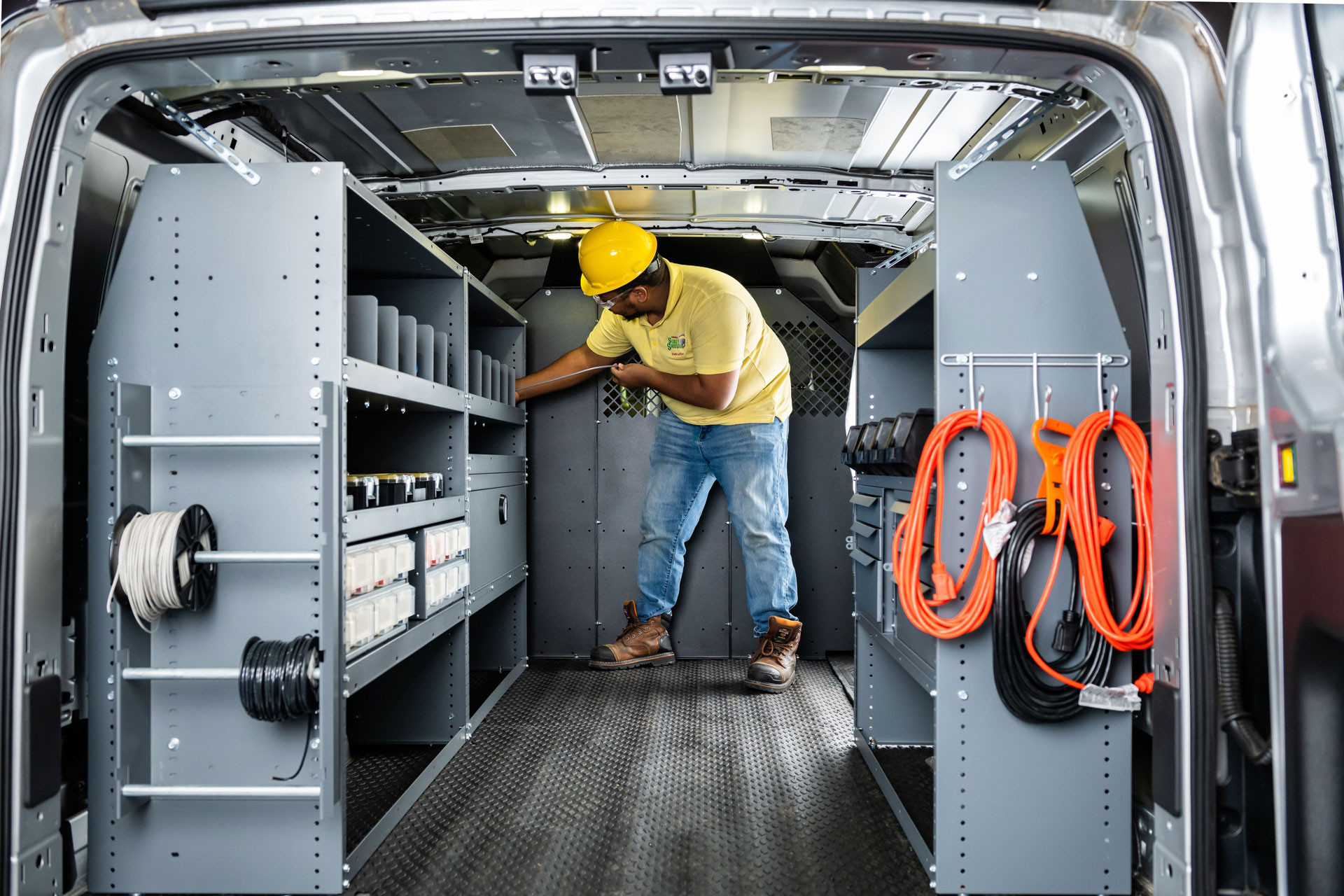
When it comes to building a productive commercial vehicle, few decisions have a greater impact than selecting the right shelving system. Shelving isn’t simply a place to store tools—it’s the foundation of an organized mobile workspace that influences technician productivity, safety, inventory management, and long-term fleet performance.
Whether you’re outfitting a single service van or standardizing an entire fleet, choosing the right shelving system starts with understanding how your technicians work—not just what they carry.
Here are the key questions every fleet manager should ask before investing in commercial van shelving.
Before comparing shelving options, take inventory of what your technicians actually use.
An electrician’s storage needs differ significantly from those of an HVAC technician, plumber, telecom installer, or building maintenance professional. Frequently used tools and parts should be easily accessible, while specialty equipment can be stored deeper within the cargo area.
The best shelving systems are designed around daily workflow rather than simply maximizing storage capacity.
Material selection affects more than durability.
Steel shelving offers exceptional strength and is ideal for fleets carrying heavier equipment or operating in demanding environments. Aluminum shelving provides comparable performance while reducing vehicle weight, making it an excellent choice for organizations focused on payload capacity, fuel economy, or electric vehicle range.
The right answer depends on your fleet’s operational priorities—not just the price tag.
An organized vehicle should reduce unnecessary movement.
Technicians shouldn’t have to climb into the cargo area or move multiple tools just to reach a commonly used item. Shelving should place frequently used equipment within easy reach while creating logical storage zones for parts, safety equipment, and specialized tools.
When workflow improves, productivity naturally follows.
Fleet needs rarely stay the same.
New services, new vehicles, and evolving technician responsibilities often require storage layouts to change over time. Choosing a modular shelving system allows fleets to add accessories, drawers, dividers, cabinets, and other components without replacing the entire upfit.
Flexibility today can significantly reduce future fleet costs.
Consistency benefits both technicians and managers.
When every vehicle follows a similar layout, technicians can move between vans with minimal disruption. Standardized shelving also simplifies inventory management, onboarding, maintenance, and vehicle replacement.
For growing organizations, standardization often becomes one of the biggest drivers of long-term efficiency.
The goal isn’t necessarily to install more shelving.
Well-designed systems maximize usable cargo space while maintaining safe walkways and easy access to equipment. Features like tapered shelving, configurable shelf heights, and integrated storage accessories help increase organization without making the cargo area feel cramped.
Every square foot inside the vehicle should support technician productivity.
Lost parts and duplicate inventory create unnecessary costs.
Shelving paired with bins, dividers, drawers, and labeled storage makes it easier to organize replacement parts, consumables, and tools. Consistent organization also allows technicians to identify missing inventory before leaving for the next service call.
Better inventory control leads to fewer delays, fewer replacement purchases, and more efficient operations.
Commercial vehicles work hard every day.
Shelving should be engineered to withstand years of daily loading, unloading, vibration, and changing jobsite conditions. Choosing durable, vehicle-specific solutions helps maximize the life of the upfit while reducing maintenance and replacement costs over time.
An upfit should continue delivering value long after it’s installed.
What Fleet Managers Ask:
1. How do I know if my fleet has outgrown its current shelving system?
If technicians are carrying tools on the floor, creating temporary storage solutions, or making extra trips because inventory is difficult to organize, it’s likely time to reevaluate your shelving layout. Growth often requires storage systems that are more modular and better aligned with current workflows.
Why It Matters: Masterack’s modular shelving systems can be expanded and reconfigured as your fleet grows, helping extend the life of your upfit while minimizing future replacement costs.
2. Should every technician have the same shelving layout?
Not necessarily—but similar trades should. Standardizing layouts for technicians performing the same work improves efficiency, simplifies onboarding, and makes inventory easier to manage while still allowing for minor adjustments based on individual responsibilities.
Why It Matters: Masterack offers configurable shelving packages that help fleets balance standardization with the flexibility needed across different trades and vehicle platforms.
3. Can shelving help improve technician safety?
Yes. Organized shelving reduces loose cargo, keeps heavy equipment properly secured, and minimizes unnecessary reaching, climbing, and lifting inside the vehicle. A clean, organized workspace also helps reduce trip hazards during busy service days.
Why It Matters: Masterack designs shelving systems that integrate with partitions, cargo management accessories, and secure storage solutions to create safer mobile work environments.
4. How can I maximize storage without overcrowding the cargo area?
The key is designing around workflow instead of adding more shelves. Features like tapered shelving, adjustable shelves, drawers, and storage bins help maximize usable space while maintaining clear access throughout the vehicle.
Why It Matters: Masterack’s vehicle-specific shelving systems are engineered to optimize storage while preserving valuable aisle space, giving technicians room to work efficiently.
5. What’s the biggest mistake fleet managers make when selecting van shelving?
Choosing shelving based solely on storage capacity. The best systems balance durability, accessibility, technician workflow, and long-term flexibility to improve productivity—not simply hold more tools.
Why It Matters: Masterack works with fleets to build shelving solutions around how technicians actually perform their jobs, helping create organized vehicles that support productivity from the first service call to the last.
Masterack’s knowledgeable sales and client services team is available to answer your questions and help with any product-related questions. We’re just a phone call or email away.
Signup for the Masterack Newsletter!