
Please check our catalog to build your quote.
Upfitting a commercial van is more than selecting shelves, ladder racks, or storage accessories. It’s about creating a mobile workspace that helps technicians work safely, efficiently, and consistently every day.
When an upfit is thoughtfully planned, the benefits extend far beyond organization. Technicians spend less time searching for tools, fleets operate more efficiently, and vehicles deliver greater value throughout their lifecycle.
Unfortunately, many fleets make avoidable mistakes during the planning process—mistakes that lead to unnecessary downtime, higher operating costs, and frustrated technicians.
Whether you’re outfitting your first service van or standardizing hundreds of vehicles, avoiding these five common mistakes can help maximize your investment and improve fleet performance.
It’s easy to start selecting shelving, cabinets, or ladder racks before considering how technicians actually perform their jobs.
Instead, begin by understanding daily workflow. Which tools are used on every service call? What equipment needs to remain secure? Which items should be within arm’s reach? The answers should shape the upfit—not the products themselves.
Another common mistake is trying to maximize storage capacity instead of productivity. More shelves don’t necessarily create a better workspace. An organized vehicle prioritizes accessibility, allowing technicians to quickly retrieve the tools and materials they use most often without unnecessary reaching, climbing, or moving equipment.
The most productive mobile workspaces are designed around technician efficiency, not simply available cargo space.
As fleets grow, consistency becomes one of the biggest drivers of operational efficiency.
When every vehicle is organized differently, technicians waste valuable time locating tools, inventory becomes harder to manage, and onboarding new employees becomes more complicated. Even experienced technicians can lose productivity when moving between vehicles with different layouts.
Standardizing shelving, storage systems, and core upfit components across similar vehicle types creates a more predictable work environment while simplifying maintenance, inventory management, and future vehicle replacements.
Consistency doesn’t eliminate flexibility—it creates a foundation that can still be tailored to the needs of different trades.
A lower upfront price doesn’t always translate into a lower total cost of ownership.
Fleet managers should consider how an upfit will perform over the life of the vehicle. Durable materials, modular storage systems, and configurable layouts often provide greater long-term value by reducing replacement costs and adapting as business needs change.
The same principle applies when choosing an upfitting partner. Experience, engineering expertise, product quality, and long-term support often have a greater impact on fleet performance than the initial purchase price.
The best investment is one that continues delivering value long after installation.
Safety shouldn’t be viewed as a single product—it’s the result of a complete cargo management strategy.
Loose tools, unsecured equipment, and poorly organized cargo can create unnecessary risks for technicians while increasing the likelihood of damaged inventory and vehicle interiors.
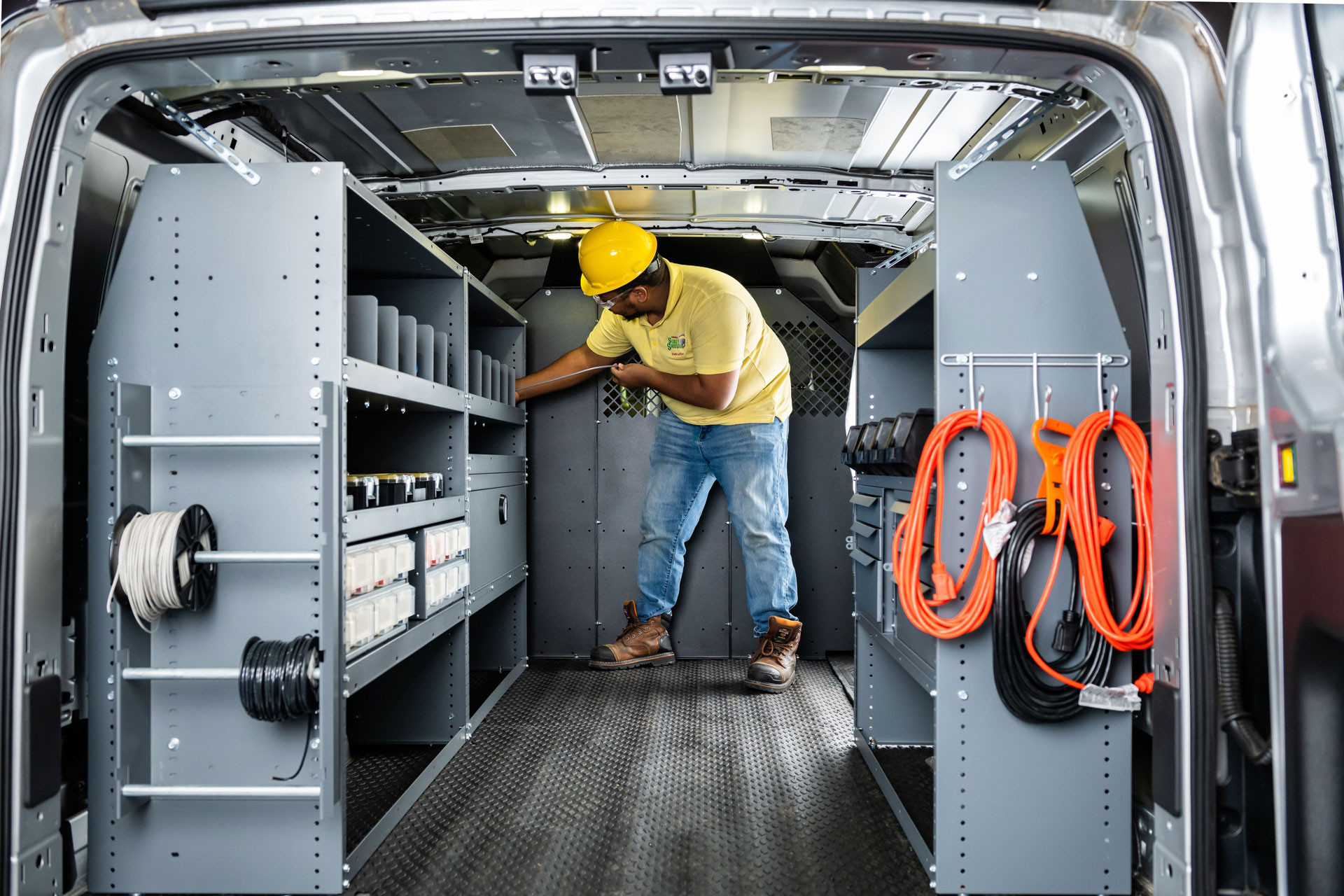
Components like partitions, secure shelving, locking cabinets, ladder racks, cargo restraints, and durable flooring all work together to create a safer and more organized mobile workspace. When every item has a designated place, technicians spend less time managing equipment and more time focusing on the job.
Better organization doesn’t just improve efficiency—it helps protect both employees and valuable assets.
Installing equipment is only one part of the upfit process.
The best commercial van upfitters become long-term partners that understand your industry, your technicians, and your operational goals. They help fleets standardize vehicles, recommend scalable solutions, and provide guidance as fleet requirements evolve.
Whether you’re expanding into new service areas, adopting electric vehicles, or growing your fleet, working with an experienced partner helps ensure your investment continues supporting your business well into the future.
The right upfitter isn’t simply selling products—they’re helping build a more productive fleet.
For decades, Masterack has partnered with commercial fleets to design mobile workspaces that improve organization, safety, and technician productivity. From modular shelving and secure storage to ladder racks, partitions, flooring, and complete cargo management systems, every solution is engineered around real-world workflow.
Whether you’re upfitting a single service vehicle or standardizing an entire fleet, Masterack helps organizations build commercial vans that work smarter today while remaining flexible for tomorrow.
What Fleet Managers Ask:
1. How can I tell if my current upfit is reducing technician productivity?
If technicians regularly search for tools, carry duplicate inventory, or make unnecessary trips back to the warehouse, your vehicle layout may no longer support an efficient workflow. Even small improvements in organization can save valuable time across every service call.
2. Can I improve an existing upfit without replacing everything?
Yes. Many fleets improve organization by adding modular shelving, drawers, cabinets, cargo accessories, or ergonomic ladder storage to existing vehicles. A complete redesign isn’t always necessary to achieve meaningful productivity gains.
3. What’s the biggest sign an upfit wasn’t planned correctly?
When technicians create their own workarounds. If tools are stored on the floor, inventory doesn’t have a dedicated location, or frequently used equipment is difficult to access, the vehicle is working against the technician instead of supporting them.
4. How often should fleet managers review their vehicle layouts?
Vehicle layouts should be evaluated whenever workflows change, new equipment is introduced, or service offerings expand. Regular reviews help ensure the upfit continues supporting technician productivity and fleet performance over time.
5. Can the right upfit really improve fleet ROI?
Absolutely. Organized vehicles help reduce wasted time, protect valuable equipment, improve inventory management, and support technician efficiency. Across an entire fleet, those incremental improvements can have a meaningful impact on productivity and long-term operating costs.
Masterack’s knowledgeable sales and client services team is available to answer your questions and help with any product-related questions. We’re just a phone call or email away.
Signup for the Masterack Newsletter!