
Please check our catalog to build your quote.
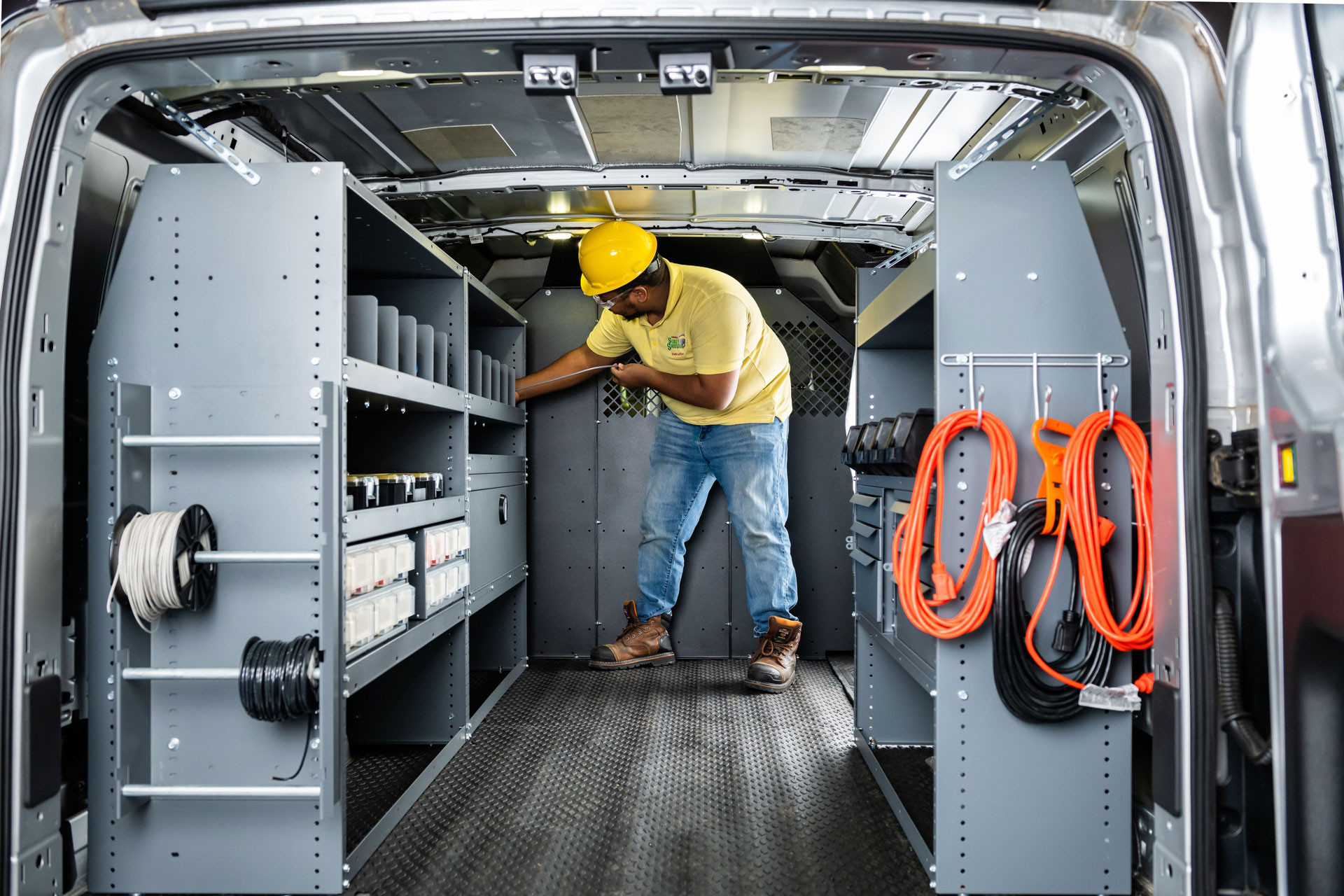
A commercial van is more than a way to get technicians from one job to the next—it’s a mobile workspace. And like any workspace, its effectiveness depends on organization.
A well-designed cargo management system helps technicians quickly access tools, secure valuable equipment, improve safety, and maximize productivity throughout the workday. But building the right system involves much more than adding shelves or storage bins. Every component should work together to support technician workflow while adapting to the needs of your fleet.
Whether you’re outfitting a single service vehicle or standardizing an entire fleet, these are the key questions every fleet manager should ask before investing in a cargo management system.
Every fleet has different storage requirements.
An HVAC technician may carry refrigerant tanks, recovery equipment, and replacement parts. Electricians rely on organized storage for fittings, conduit, and hand tools. Telecom crews need room for cable, testing equipment, and ladders.
Understanding what technicians use most often helps determine how storage should be organized. Frequently accessed items should remain within easy reach, while specialty equipment can be stored deeper within the vehicle.
The most effective cargo management systems are designed around technician workflow—not simply cargo capacity.
Cargo management isn’t a single product.
Shelving, cabinets, drawers, partitions, ladder racks, flooring, accessories, and cargo restraints should function as one integrated system. When each component complements the others, technicians spend less time searching for equipment and more time completing service calls.
A complete system creates a safer, cleaner, and more productive mobile workspace.
Adding more storage isn’t always the answer.
An overcrowded cargo area can make tools harder to reach and reduce technician efficiency. Instead, organize equipment based on frequency of use while maintaining clear walkways and accessible work areas.
Features like tapered shelving, drawer systems, roof-mounted ladder storage, and modular accessories help maximize usable space without sacrificing accessibility.
Your fleet today won’t be your fleet five years from now.
New vehicle platforms, changing technician responsibilities, and evolving service offerings all affect how cargo is stored.
Choosing modular cargo management solutions allows shelving, cabinets, drawers, and accessories to be added or reconfigured over time without replacing the entire upfit.
Flexibility protects your investment while supporting long-term fleet growth.
Organization and safety go hand in hand.
Loose equipment, shifting cargo, and cluttered workspaces increase the risk of damaged tools and workplace injuries. A complete cargo management system keeps equipment secured while helping technicians safely access everything they need throughout the workday.
Partitions, locking cabinets, cargo restraints, ladder racks, and durable flooring all contribute to a safer work environment.
Consistency improves efficiency.
Standardized cargo management systems simplify inventory control, technician training, vehicle maintenance, and future fleet expansion. Even when different trades require unique layouts, establishing standardized packages for similar vocations creates a more predictable and productive operation.
Consistency reduces complexity while improving day-to-day performance.
The right cargo management system should continue delivering value long after installation.
Look for solutions engineered specifically for commercial vehicles that offer durability, modularity, and the flexibility to grow alongside your fleet. A thoughtful investment today helps reduce maintenance costs, protect valuable equipment, and support technician productivity for years to come.
The goal isn’t simply organizing a vehicle—it’s improving the way your fleet operates.
For decades, Masterack has helped commercial fleets transform cargo vans into organized, productive mobile workspaces. From shelving and ladder racks to partitions, flooring, cabinets, drawers, and configurable accessories, every solution is designed to work together as a complete cargo management system.
Whether supporting HVAC, telecom, electrical, plumbing, maintenance, or utility fleets, Masterack helps organizations improve technician workflow, maximize vehicle space, and build standardized upfits that can evolve alongside changing business needs.
What Fleet Managers Ask:
1. What’s the difference between buying storage products and investing in a cargo management system?
Individual storage products solve individual problems. A cargo management system takes a holistic approach by integrating shelving, storage, safety features, and workflow into one cohesive mobile workspace designed to improve technician productivity.
2. How do I know if my fleet’s cargo management system is working?
Look at technician behavior. If employees consistently know where tools belong, spend less time searching for equipment, and complete service calls efficiently, your system is supporting productivity. If technicians create workarounds or struggle with organization, it may be time to reevaluate the layout.
3. Can one cargo management system work across different trades?
The overall strategy can remain consistent, but the configuration should reflect each vocation’s unique needs. Modular systems make it possible to standardize core components while customizing storage for HVAC, electrical, telecom, plumbing, maintenance, and other service applications.
4. How can cargo management improve fleet ROI?
Organized vehicles help reduce wasted time, protect expensive equipment, improve inventory control, and support safer working conditions. Across an entire fleet, those incremental improvements can lead to measurable productivity gains and lower operating costs.
5. Should I plan my cargo management system before purchasing new vehicles?
Whenever possible, yes. Planning your cargo management strategy early helps ensure the vehicle, upfit, and technician workflow are aligned from day one. It also simplifies fleet standardization and reduces the need for future modifications.
Masterack’s knowledgeable sales and client services team is available to answer your questions and help with any product-related questions. We’re just a phone call or email away.
Signup for the Masterack Newsletter!