
Please check our catalog to build your quote.
When upfitting your vehicle, the partition might not be the flashiest component—but it’s one of the most important. A quality partition doesn’t just separate the cab from the cargo area—it protects drivers, improves efficiency, and enhances the overall work experience. In our “Build Your Upfit ” series, we’re starting with this essential piece of equipment: the cargo van partition.
Picture this: A delivery van hits the brakes suddenly. In the back, unsecured packages slide forward. Without a partition, those items could hit the driver, damage the interior, or worse. That’s why a well-installed partition is more than a divider—it’s a critical safety feature.
Beyond safety, partitions also help with organization and comfort. They create a physical barrier that improves climate control in the cab and reduces noise from the cargo area. For fleets where tools, equipment, or goods are always in motion, a partition provides order, efficiency, and peace of mind.
The most common partition materials are steel and composite, each offering distinct benefits depending on your vehicle’s use case.
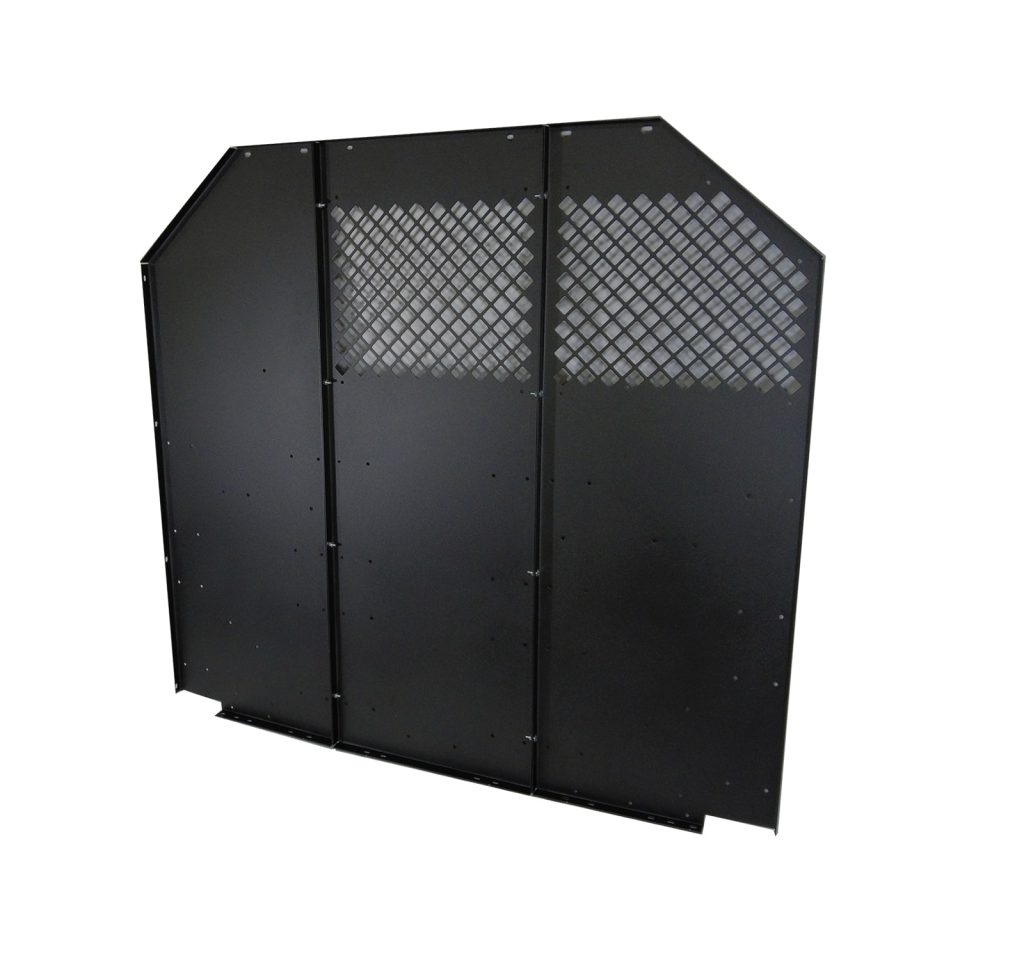
Being rugged and highly durable, makes steel partitions a solid choice for fleets carrying heavy equipment or working in demanding environments. They provide strong protection against shifting cargo and are often the go-to in industries like construction, utility service, and industrial maintenance.
But with strength comes weight. Steel partitions can contribute to higher upfit weight, which affects fuel economy and payload.
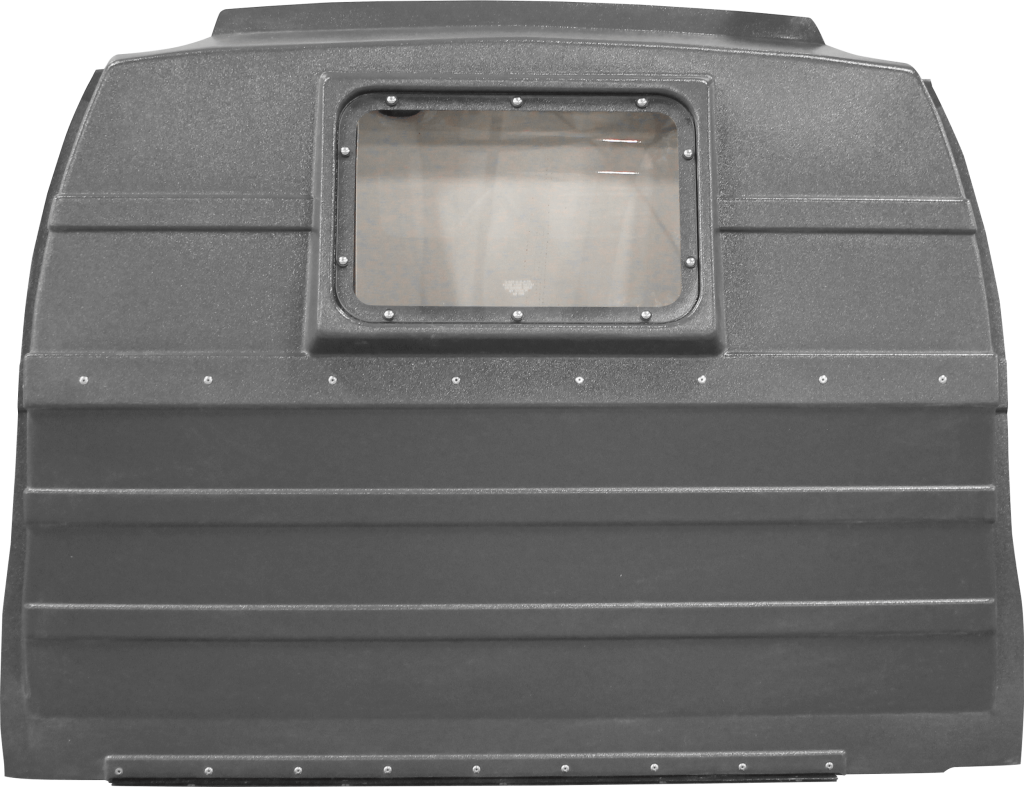
A modern alternative partition choice. These are crafted from advanced polymers and engineered for strength – and they’re up to 40% lighter than steel. That translates to better fuel efficiency and more usable payload. They also provide a contoured form fit to the van body, offering increased legroom and better insulation—two features drivers notice on long routes.
Once you’ve chosen a material, the next big question is: access. Should your partition include a door? And if so, which kind?
The answer depends on how your drivers use their vans.
Sliding doors are ideal for urban routes or tight delivery zones. They allow drivers to move between the cab and cargo area without opening the van’s side or rear doors. This is perfect for delivery personnel who make frequent stops or work in bad weather.
Hinged doors, by contrast, offer a wider opening, making it easier to carry large items through. While they require more clearance to open, they’re preferred in trades where technicians are regularly transporting bulky tools or equipment.
Masterack offers both sliding and hinged door options across its steel and composite partition lines, allowing fleets to choose what suits their operation best.
Picture this: A delivery van hits the brakes suddenly. In the back, unsecured packages slide forward. Without a partition, those items could hit the driver, damage the interior, or worse. That’s why a well-installed partition is more than a divider—it’s a critical safety feature.
Beyond safety, partitions also help with organization and comfort. They create a physical barrier that improves climate control in the cab and reduces noise from the cargo area. For fleets where tools, equipment, or goods are always in motion, a partition provides order, efficiency, and peace of mind.
With decades of experience in commercial upfitting, Masterack understands what fleets need. Their partition line is built with durability, flexibility, and performance in mind. Whether your priority is protecting drivers, improving access, or reducing vehicle weight, there’s a Masterack solution ready to deliver.
Highlights of their partition line include:
And because Masterack products are built with upfitters and fleet managers in mind, their solutions are as easy to install as they are to depend on.
As you consider your fleet’s needs, ask the right questions:
Answering these will guide you toward the best partition configuration for your vehicles—and Masterack has an option to meet every requirement.
Ready to build your upfit?
Browse Masterack’s full range of partition solutions here and take the first step toward a safer, more efficient fleet.
1. Do all commercial vans need a partition?
Not every vehicle requires a partition, but most service, utility, and contractor vans benefit from one. Partitions help separate the cab from the cargo area, improving driver safety while reducing road noise and helping maintain a more comfortable cab environment throughout the workday.
2. How do I decide between a solid partition and one with a door?
It depends on how technicians use the vehicle. A partition with a door allows convenient access between the cab and cargo area, making it ideal for delivery fleets or technicians who frequently retrieve items without exiting the vehicle. Solid partitions provide maximum separation and are often preferred when security or cargo containment is the primary concern.
3. How important is vehicle weight when selecting a partition?
Vehicle weight should always be considered during the upfit process. Lightweight composite partitions can help maximize available payload and improve fuel efficiency while still providing excellent protection. For fleets operating electric vehicles, reducing overall vehicle weight may also help extend driving range.
4. Can a partition be installed as part of a larger upfit?
Absolutely. Partitions are typically one of the first components installed during the upfit process because they establish the foundation for shelving, cabinets, flooring, and other cargo management solutions. Planning the entire workspace together helps create a more efficient and cohesive mobile work environment.
5. Should fleet managers standardize partitions across every vehicle?
Standardizing partition styles across similar vehicle platforms helps simplify maintenance, technician training, and future vehicle replacements. It also creates a more consistent driving experience for employees who regularly operate multiple fleet vehicles.
Signup for the Masterack Newsletter!