
Please check our catalog to build your quote.
For telecom technicians, the service van is far more than transportation—it’s a mobile workspace that needs to keep crews organized, productive, and ready for every service call. From fiber installations and maintenance to network repairs and infrastructure upgrades, technicians carry a wide range of tools, cable, testing equipment, ladders, and replacement parts every day.
Without the right organization, valuable time is wasted searching for equipment instead of completing jobs. A properly upfitted telecom van helps technicians work more efficiently, improves safety, and maximizes every square foot of cargo space. Here’s what fleet managers should consider when designing a telecom service vehicle.

Ladders are one of the most frequently used pieces of equipment in the telecom industry, but they also consume valuable cargo space when stored inside the vehicle.
Exterior ladder racks allow technicians to transport extension and step ladders securely while keeping the cargo area available for tools and equipment. Ergonomic ladder rack systems also reduce the physical strain of loading and unloading ladders, helping improve both safety and productivity.
By moving ladders outside the vehicle, crews gain additional storage space while improving access at every job site.
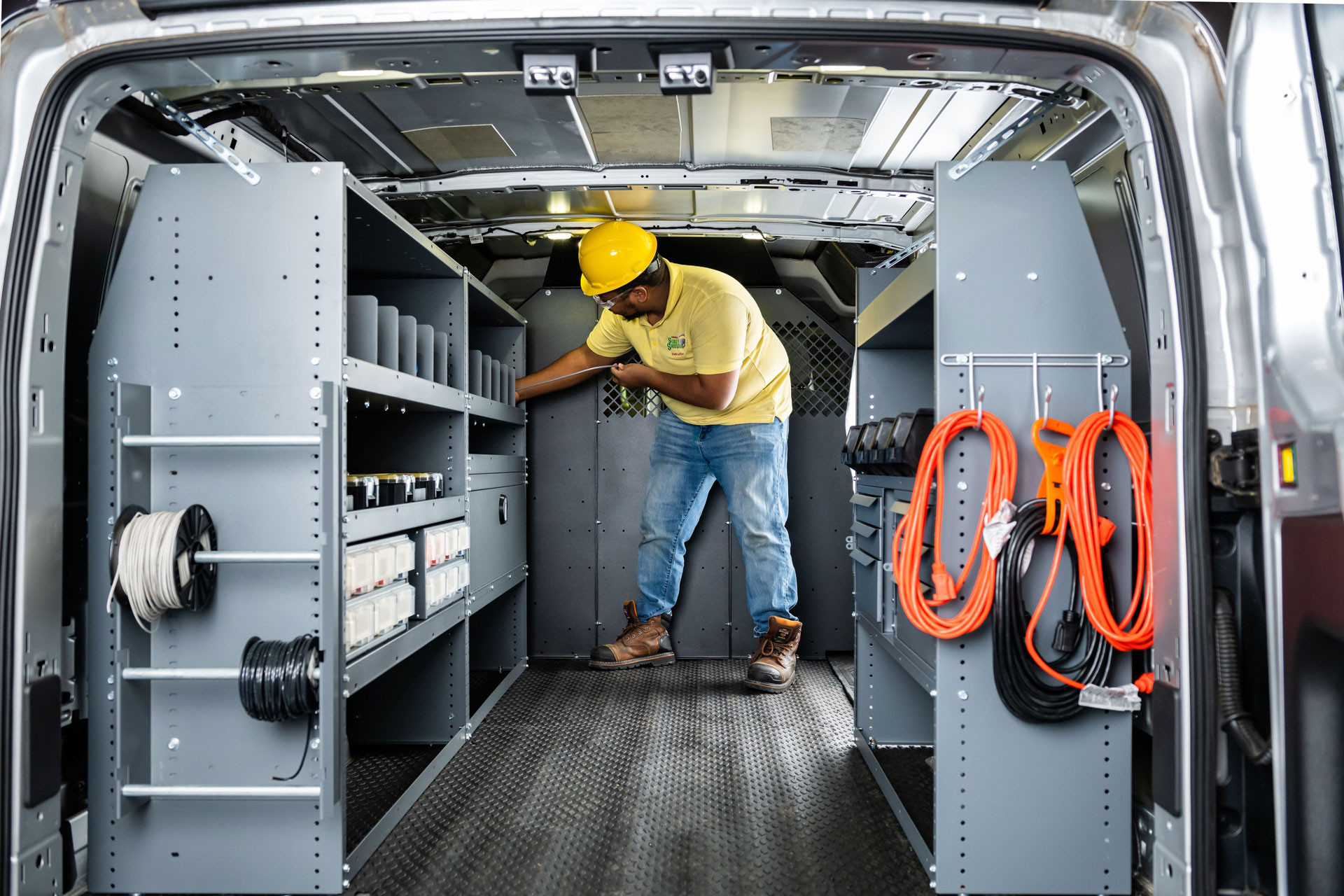
Telecom technicians carry everything from hand tools and power tools to connectors, hardware, cable, testing equipment, and PPE. Without dedicated storage, these items quickly become disorganized.
Modular shelving systems give every tool and component a designated location, allowing technicians to find what they need in seconds rather than minutes.
Look for shelving systems that offer:
The result is a cleaner, more organized workspace that helps reduce downtime throughout the day.

Telecom vehicles often carry expensive diagnostic equipment, fiber splicing tools, and specialized electronics that require additional protection.
Lockable cabinets and heavy-duty drawers provide secure storage while keeping sensitive equipment protected during transport. They also help reduce clutter by organizing frequently used tools and materials in dedicated compartments.
For fleet managers, organized storage not only protects equipment but also helps technicians quickly identify missing inventory before leaving the job site.

Safety should be a priority in every commercial vehicle.
A properly installed partition separates the cargo area from the cab, helping prevent tools and equipment from shifting forward during sudden stops or accidents. Partitions also reduce road noise, improve cab climate control, and create a more comfortable driving environment for technicians spending hours behind the wheel.
Whether choosing lightweight composite or traditional steel, partitions are one of the most valuable safety upgrades available for a telecom fleet.
Not every tool belongs on a shelf.
Accessories such as hooks, document holders, and storage bins help technicians organize the items they use most often. Cable reels, safety equipment, handheld devices, and paperwork all benefit from dedicated storage that keeps them visible and accessible.
Small improvements in organization can save dozens of minutes throughout the workday while creating a cleaner, more professional workspace.

Telecom vans endure constant loading and unloading of heavy equipment. Rubber flooring and wall liners help protect the vehicle from dents, scratches, moisture, and everyday wear while providing a safer, slip-resistant work surface.
Protective flooring also helps preserve resale value while making cleanup easier after long days in the field.
Design for Technician Workflow
Every telecom fleet operates differently, but the most productive vehicles are designed around technician workflow rather than simply adding storage wherever it fits.
Ask questions such as:
Answering these questions helps create an upfit that supports faster service calls, improves organization, and reduces unnecessary movement throughout the day.
What Fleet Managers Ask:
1. How do I choose the right upfit for a telecom service fleet?
Start by evaluating how your technicians work every day. Consider the tools they use most often, how frequently ladders are accessed, where expensive equipment should be secured, and how vehicles can be standardized across the fleet. The right upfit should improve technician workflow, reduce time spent searching for equipment, and remain flexible as your fleet grows.
2. What should every telecom service van include?
Most telecom fleets benefit from a combination of ladder racks, modular shelving, lockable cabinets or drawers, a safety partition, protective flooring, and storage accessories. Together, these solutions create an organized mobile workspace that improves technician productivity while protecting valuable tools and equipment.
3. How do I choose a commercial van upfitter for a telecom fleet?
Look for an upfitting partner with experience supporting commercial service fleets, vehicle-specific storage solutions, scalable product offerings, and a strong understanding of technician workflow. The best upfit isn’t simply the one with the most storage—it’s the one that helps technicians work more safely and efficiently every day.
4. Can commercial van upfits be expanded as fleet needs change?
Yes. Modular storage systems allow fleets to add shelving, drawers, accessories, and other cargo management solutions as vehicles, technicians, and service requirements evolve. Choosing flexible upfit solutions helps protect your investment while supporting long-term fleet growth.
5. How can fleet managers improve technician productivity without adding more vehicles?
Small improvements in vehicle organization can have a significant impact across an entire fleet. Keeping frequently used tools within easy reach, reducing time spent searching for equipment, and creating standardized vehicle layouts help technicians complete service calls more efficiently while reducing downtime throughout the day.
Masterack’s knowledgeable sales and client services team is available to answer your questions and help with any product-related questions. We’re just a phone call or email away.
Signup for the Masterack Newsletter!